
arab.

Arab communities have a long history in Afghanistan,
especially in towns and villages of the north,
with a heritage woven into regional Afghan life.
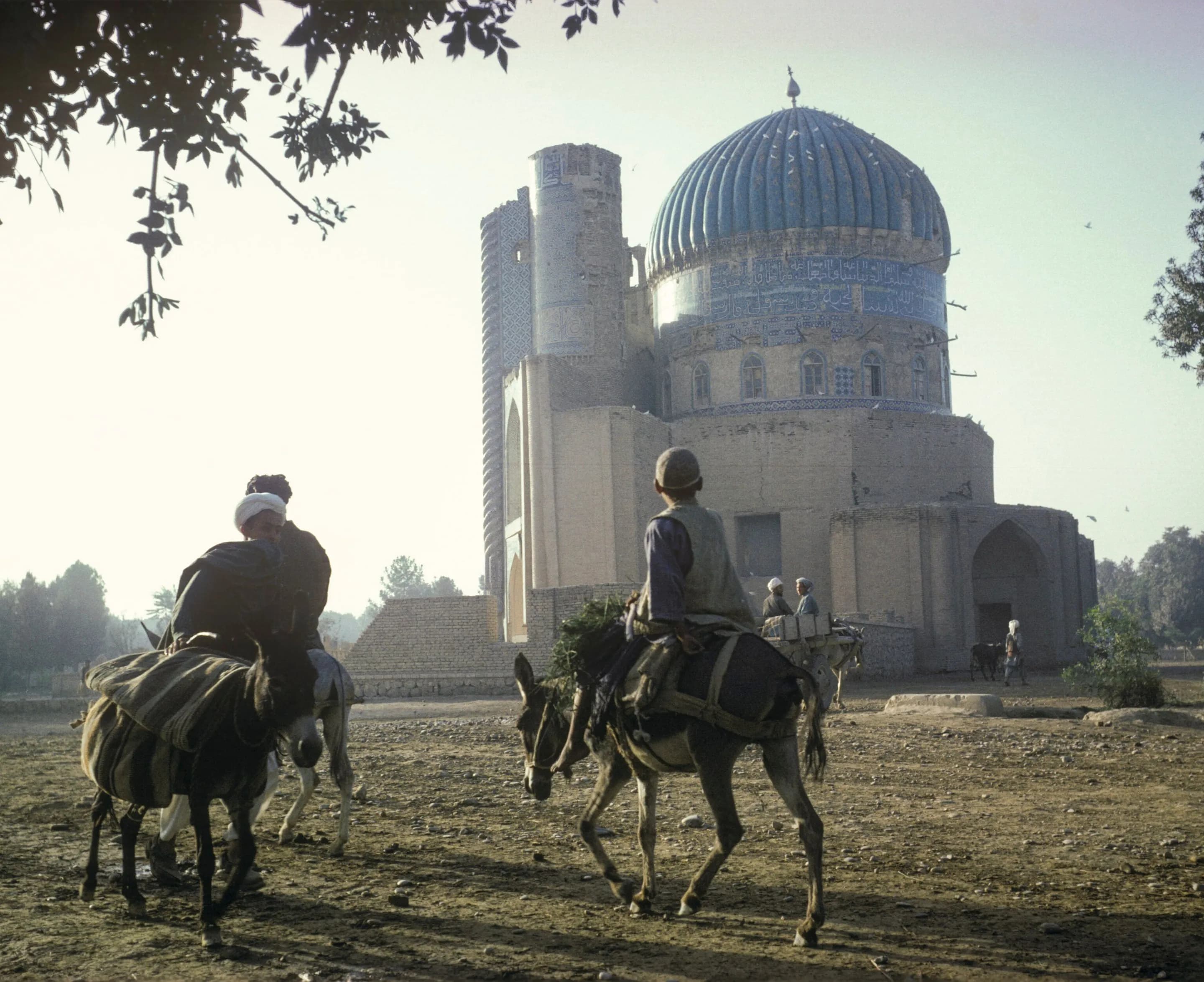
Riders on donkeys crossing the open ground in front of the blue-domed shrine of Khwaja Abu Nasr Parsa in Balkh, photographed by Herbert Maeder in 1969

who they
are

Afghan Arab heritage brings together a long historical presence, family histories passed down over generations and a way of life closely connected with neighboring Afghan communities.
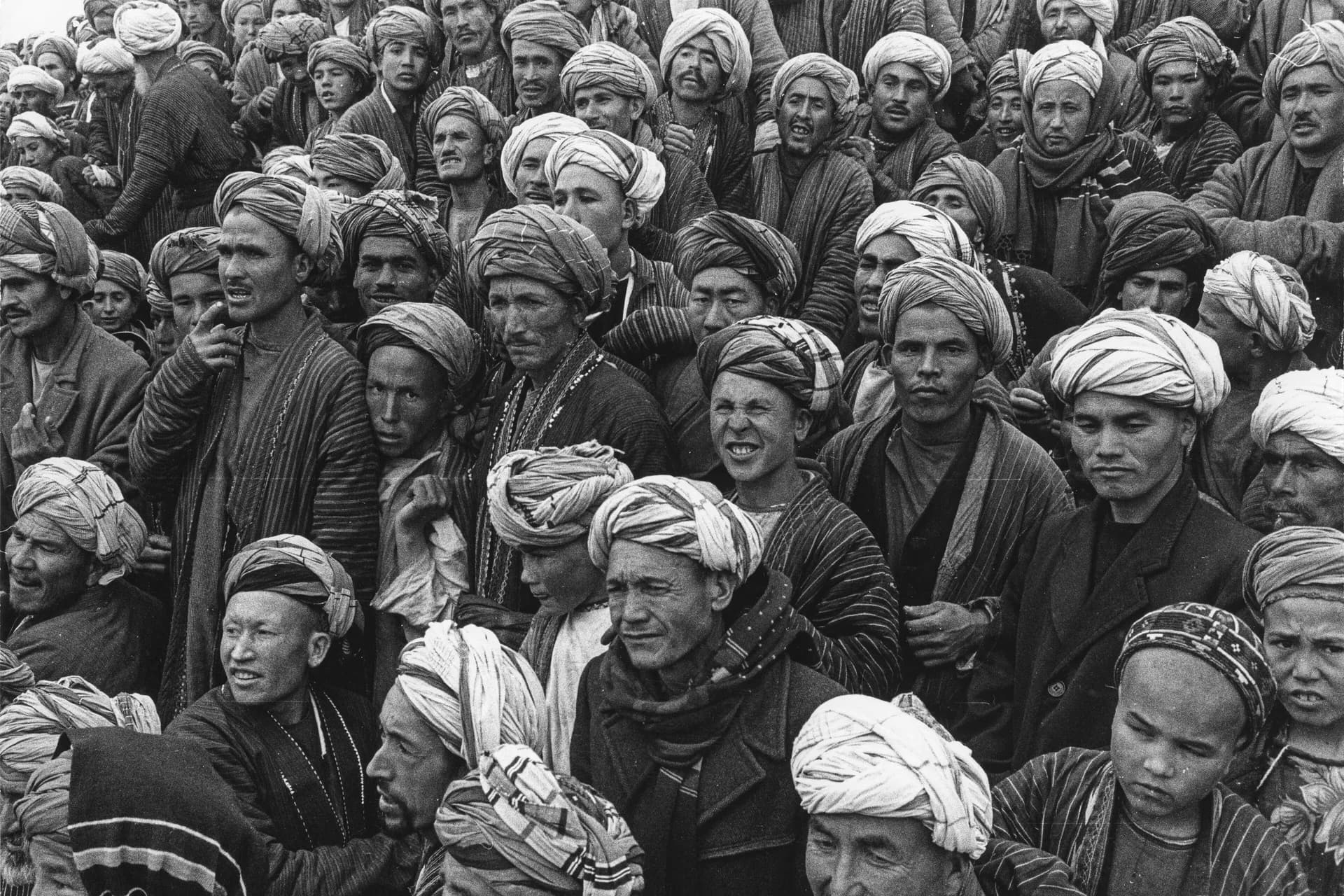
A crowd of men in white turbans and striped robes watching wrestling at the Eid al-Fitr festival in Aqcha, Jawzjan, photographed by Herbert Maeder in 1968

arab heritage

A longstanding community whose presence in the region reaches back many centuries, with many families today living in the towns and villages of northern Afghanistan.Where They Live
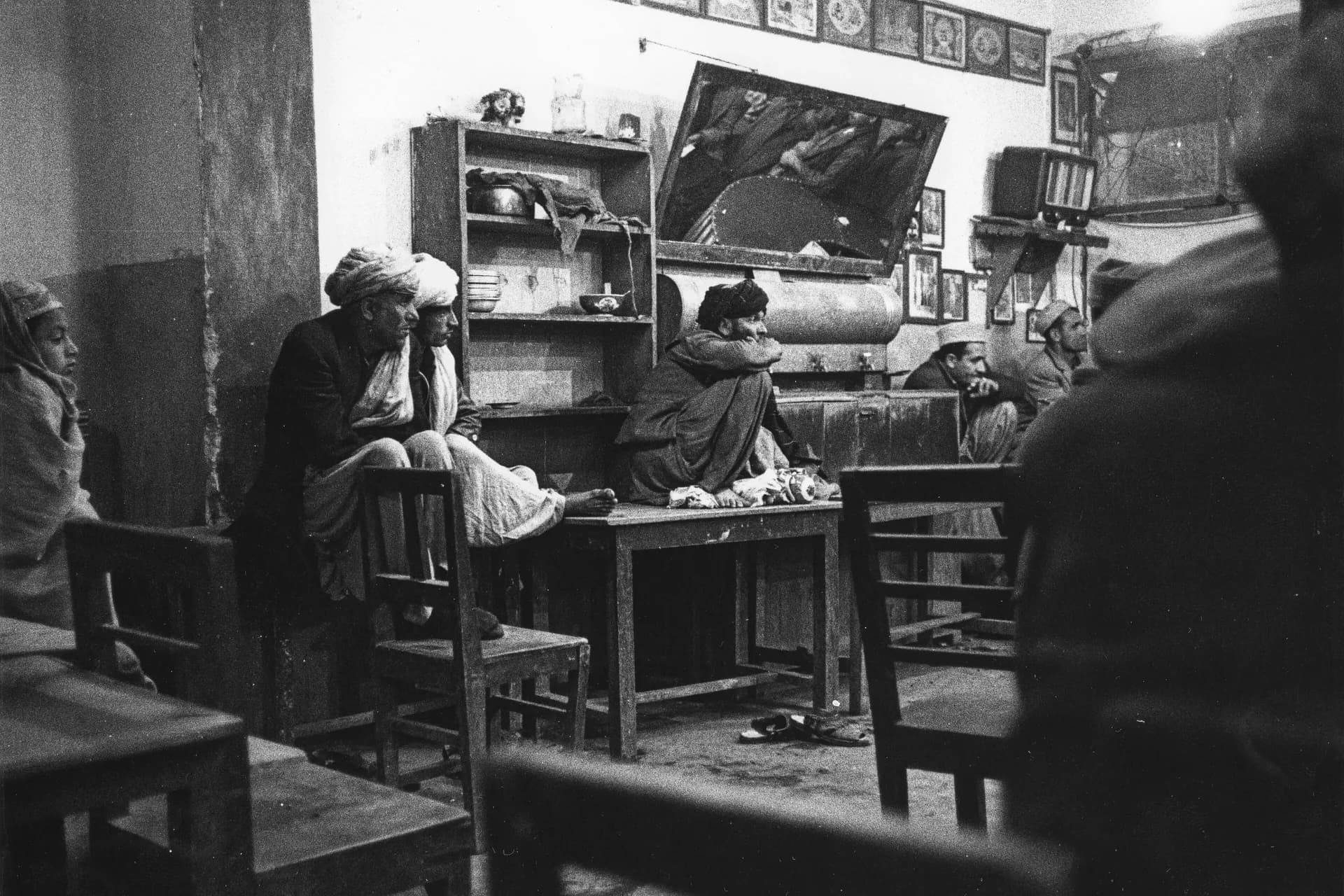
Men talking over tea inside a teahouse in Mazar-i-Sharif, Balkh, photographed by Herbert Maeder in 1967

language
today

Many Afghan Arab communities today mainly speak Dari, and some also use Uzbek or other regional languages. Arabic is not the everyday language for most families.Community Life
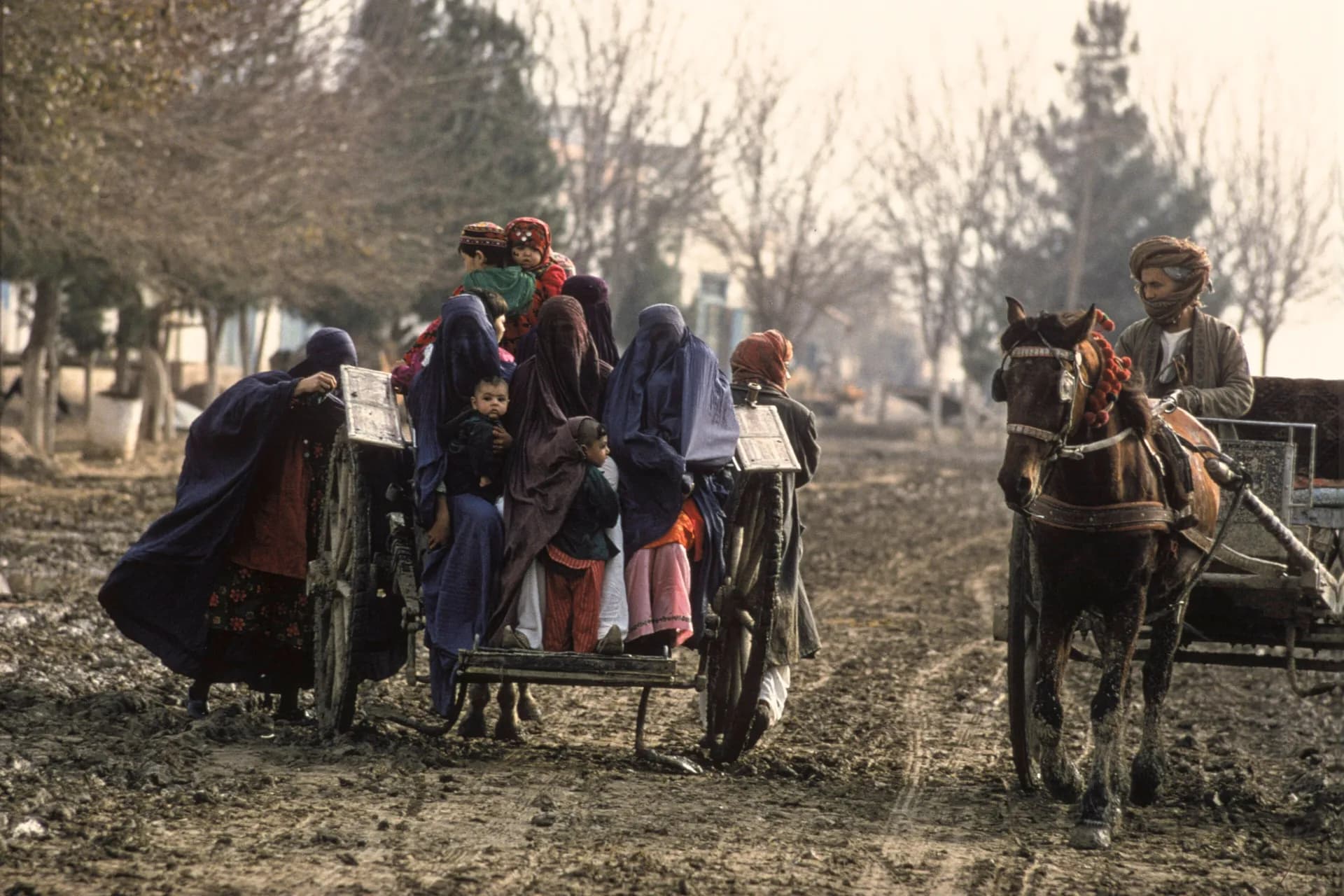
A family riding in a horse-drawn gadi cart along a tree-lined road in Aqcha, Jawzjan, photographed by Herbert Maeder in 1968

local communities

Each community has its own local history, customs and ways of life, shaped by farming, trade and close ties with neighbors.Traditional Clothing
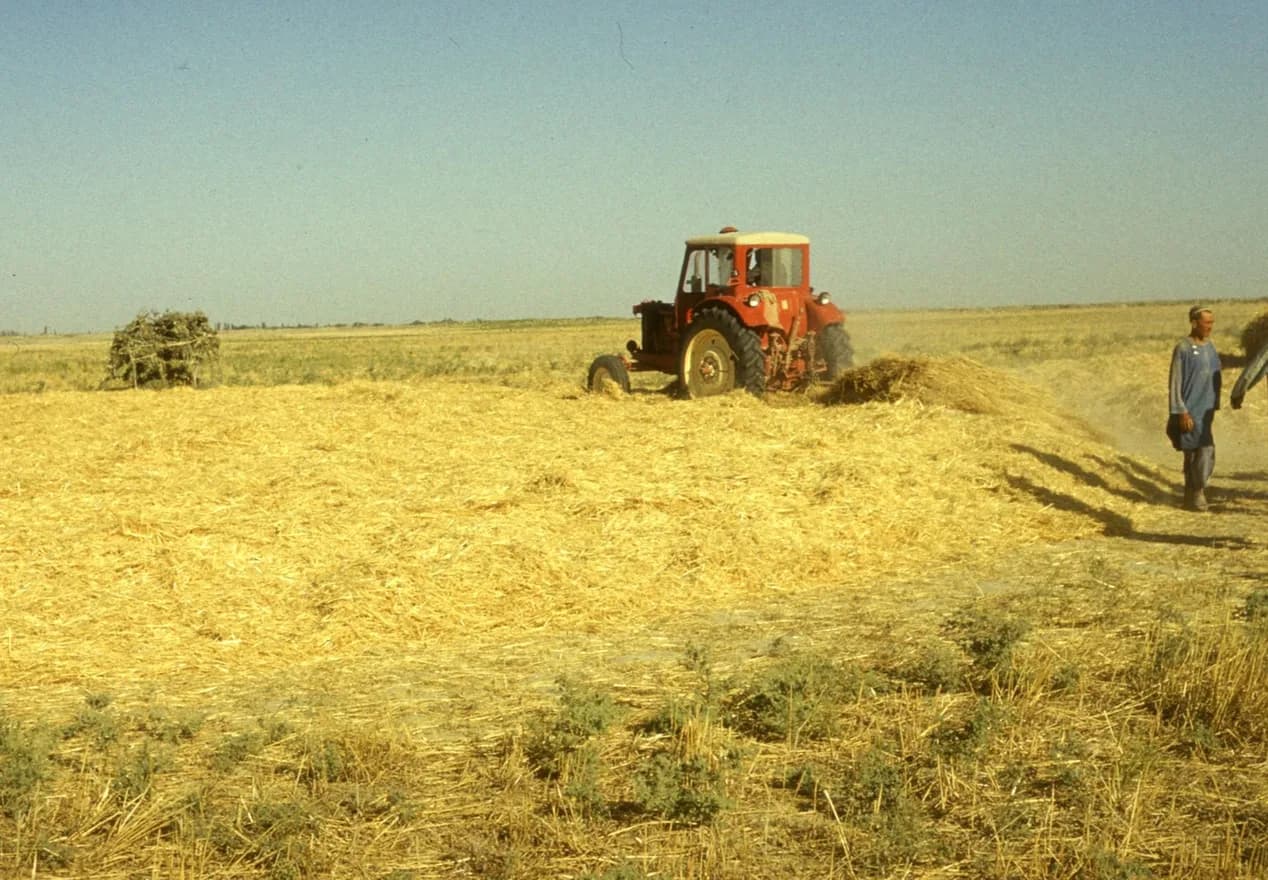
Wheat being threshed on the open plain at Daulatabad, Balkh, in 1976
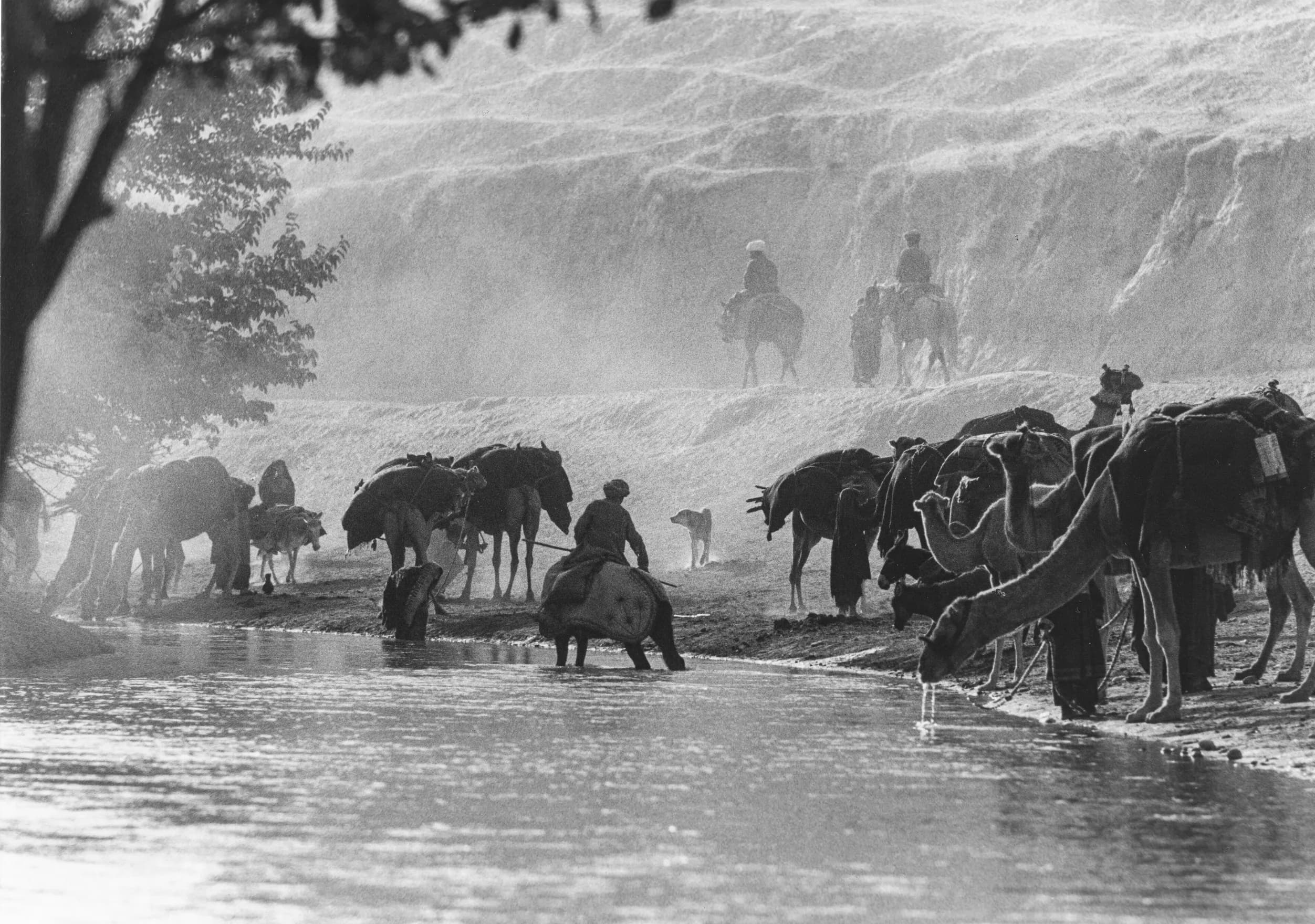
A caravan of camels and horses drinking at a river near Khanabad, Kunduz, photographed by Herbert Maeder in 1967
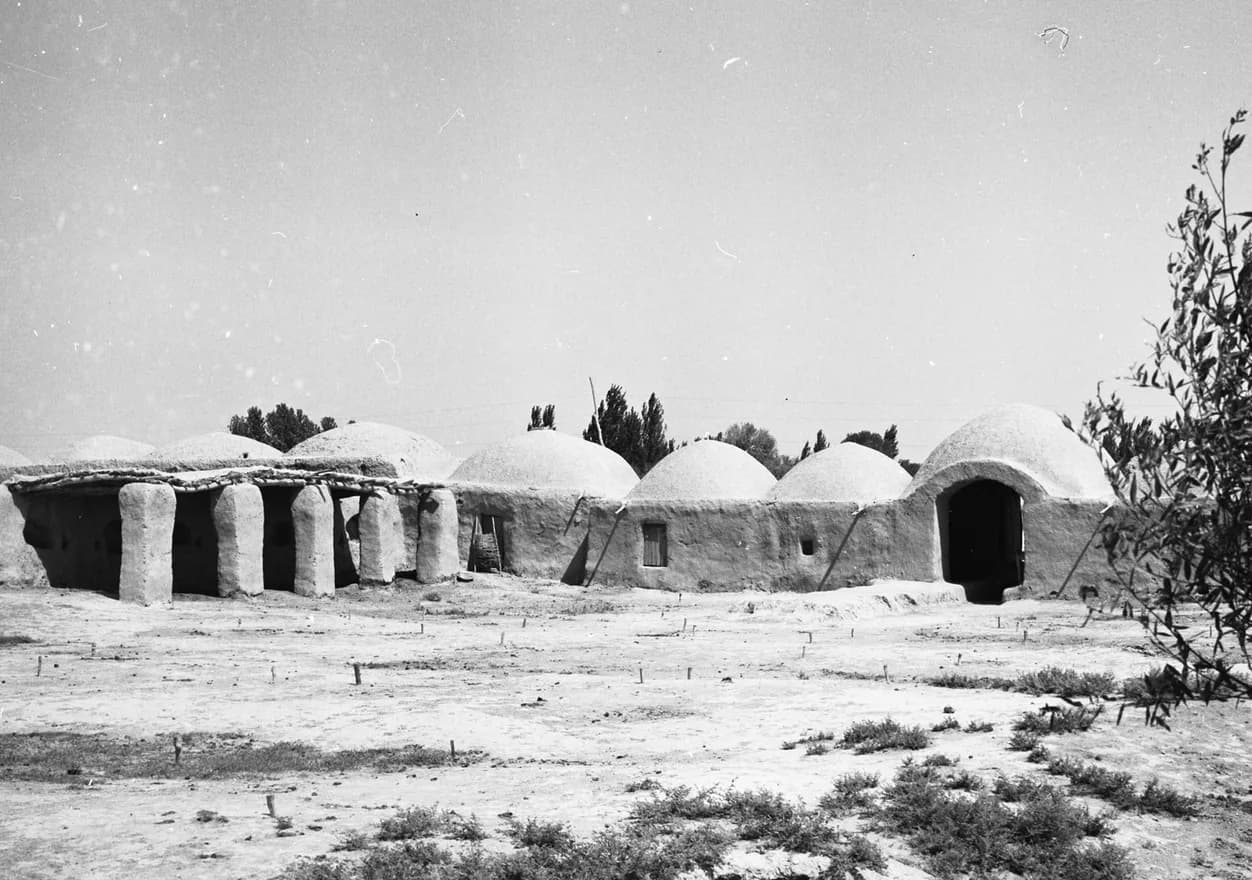
Mud-brick houses with domed roofs on the edge of Daulatabad, Balkh, in 1976
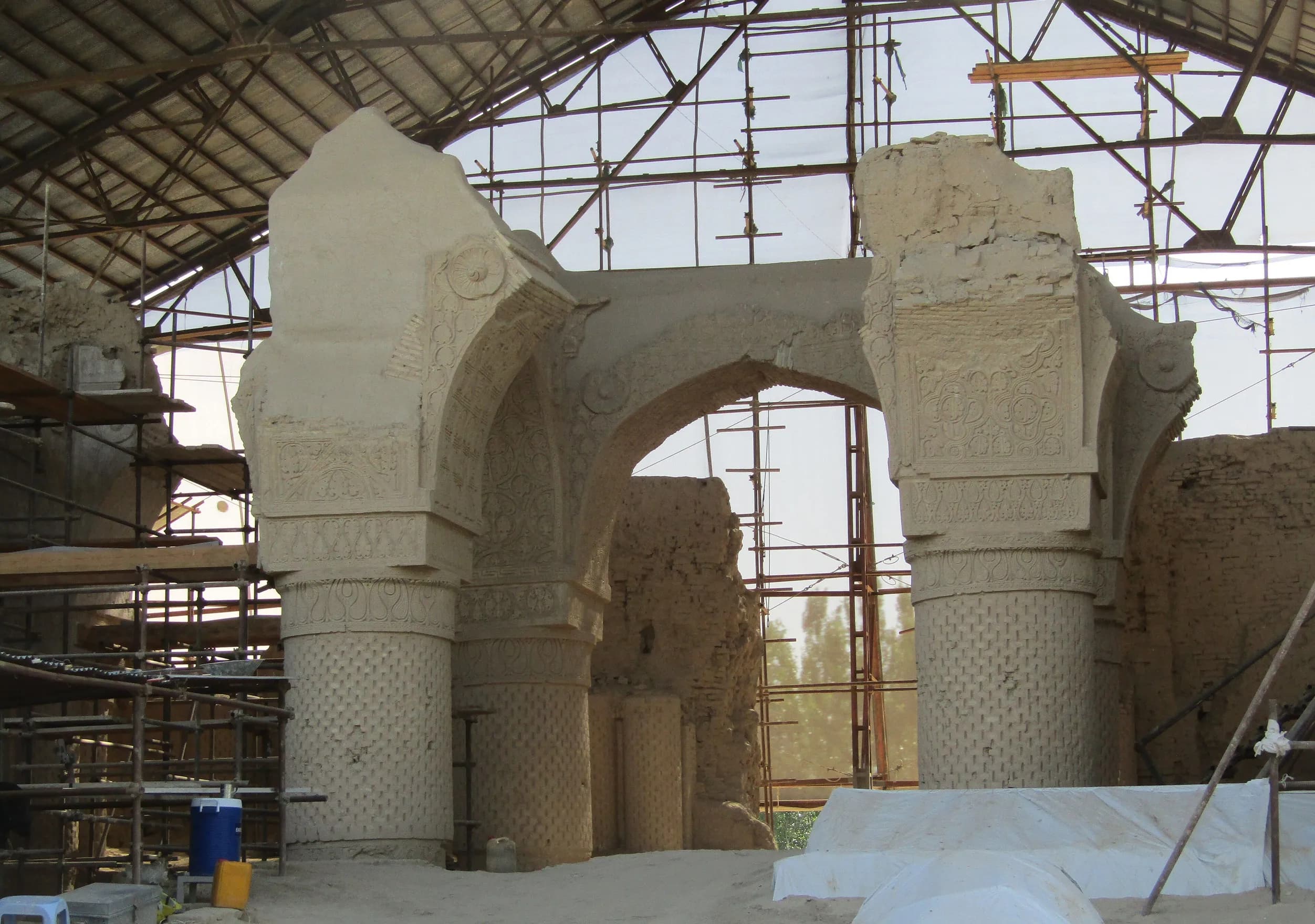
The carved stucco columns and arches of the ninth-century Noh Gonbad (Haji Piyada) mosque in Balkh, under a conservation shelter, 2018
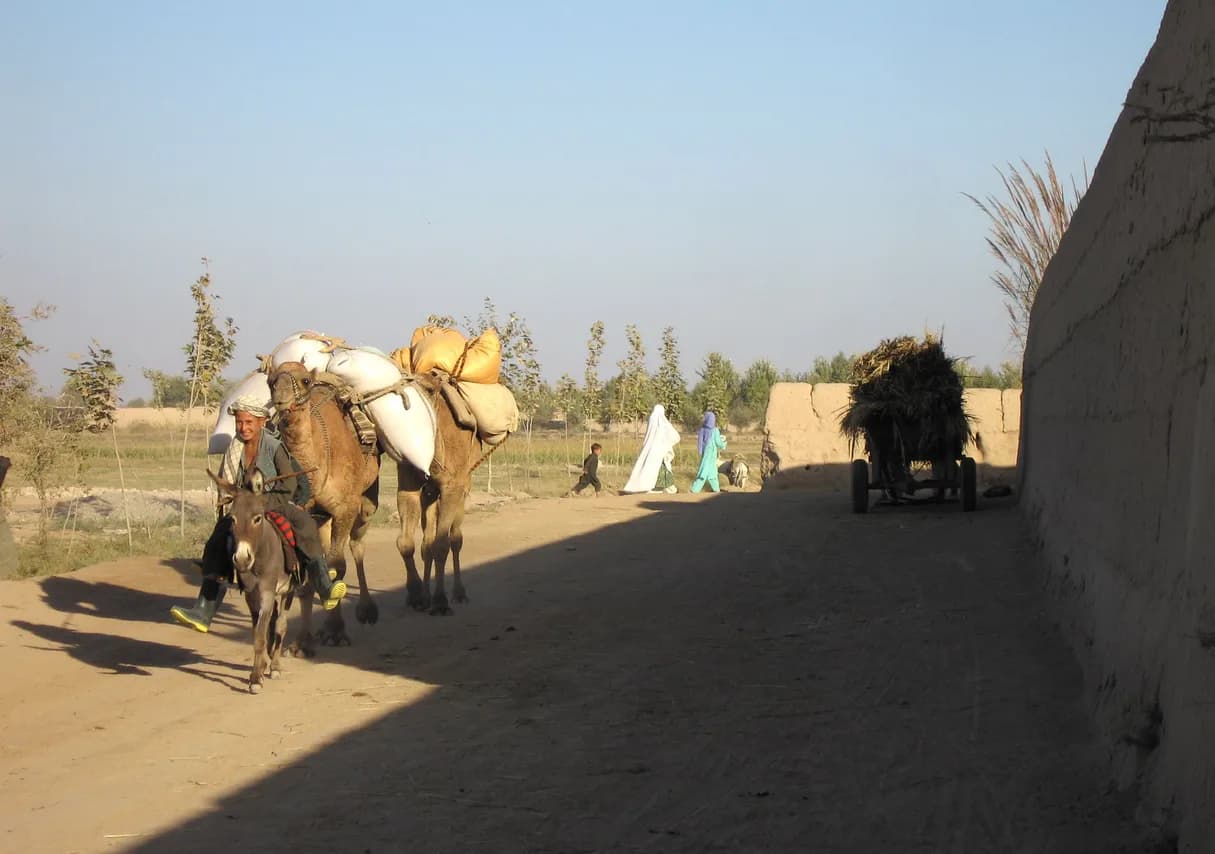
Camels carrying loads along a village road between mud walls in Imam Sahib, Kunduz, 2005

WHERE THEY LIVE. Arab communities are especially associated with northern Afghanistan, including areas of Balkh, Jawzjan, Kunduz, Sar-e Pol and Takhar. Communities also live in other parts of the country.

N

NORTHERN AFGHANISTAN
Towns, villages and plains

DR

DARI
Widely spoken today

BLK

BALKH
Historic northern region

KDZ

KUNDUZ & JAWZJAN
Communities across the north

tra­di­tion­al cloth­ing

clothing & regional styles

Traditional outfits may include long shirts and loose trousers,
worn with vests, turbans or caps and long coats in cooler months.

Long dresses with trousers and headscarves are common traditional forms,
often with embroidery and jewelry worn for special occasions.

Clothing often reflects the wider styles of northern Afghanistan;
fabrics, colors and patterns vary by town, village and family.

Weddings and family celebrations may feature festive clothing,
including embroidered garments, colorful scarves and jewelry in some communities.

community
and values

Hadschi Mokem Bay, an elder, seated in conversation in Mazar-i-Sharif, photographed by Herbert Maeder in 1968
Ties

Practices vary by region and family.

Hospitality

Welcoming guests

Tea

In many Arab communities, welcoming guests with tea, bread and a shared meal is a valued tradition. Customs vary by region and household.

Family Ties

Across generations

Kin

Many families maintain close ties across generations, offering support and sharing celebrations. Relationships and responsibilities vary by household.

Respect for Elders

Experience & guidance

Care

Traditionally, elders are often valued for their experience and guidance in family and community life. Families express this respect in different ways.

Rural & Town Life

Everyday community life

Life

Farming, livestock, trade and local markets shape daily life in many northern communities. Practices differ between towns, villages and families.

Community Traditions

Shared cultural heritage

Ties

In many communities, family histories, gatherings and celebrations help pass cultural knowledge between generations.

traditions
& cultural identity

Afghan Arab cultural heritage includes family histories, regional customs and community traditions, many shared with neighboring Afghan communities. Their expression varies by region, village and family.

FAMILY HISTORIES

Stories of ancestry and origins are often remembered and passed between generations.

HOSPITALITY

Welcoming guests is a valued tradition in many Arab communities.

SHARED LANGUAGES

Dari and other regional languages connect Arab families with the wider life of the north.

NORTHERN LIFE

Farming villages and market towns reflect generations of life on the northern plains.

MUSIC & ORAL TRADITION

Folk music, poetry and storytelling connect generations through shared stories.

LOCAL CUSTOMS

Local traditions reflect the diversity of Arab communities across Afghanistan.