
uzbek.

Uzbek communities have deep roots in Afghanistan,
especially across the northern provinces,
with a rich Turkic language and cultural heritage.
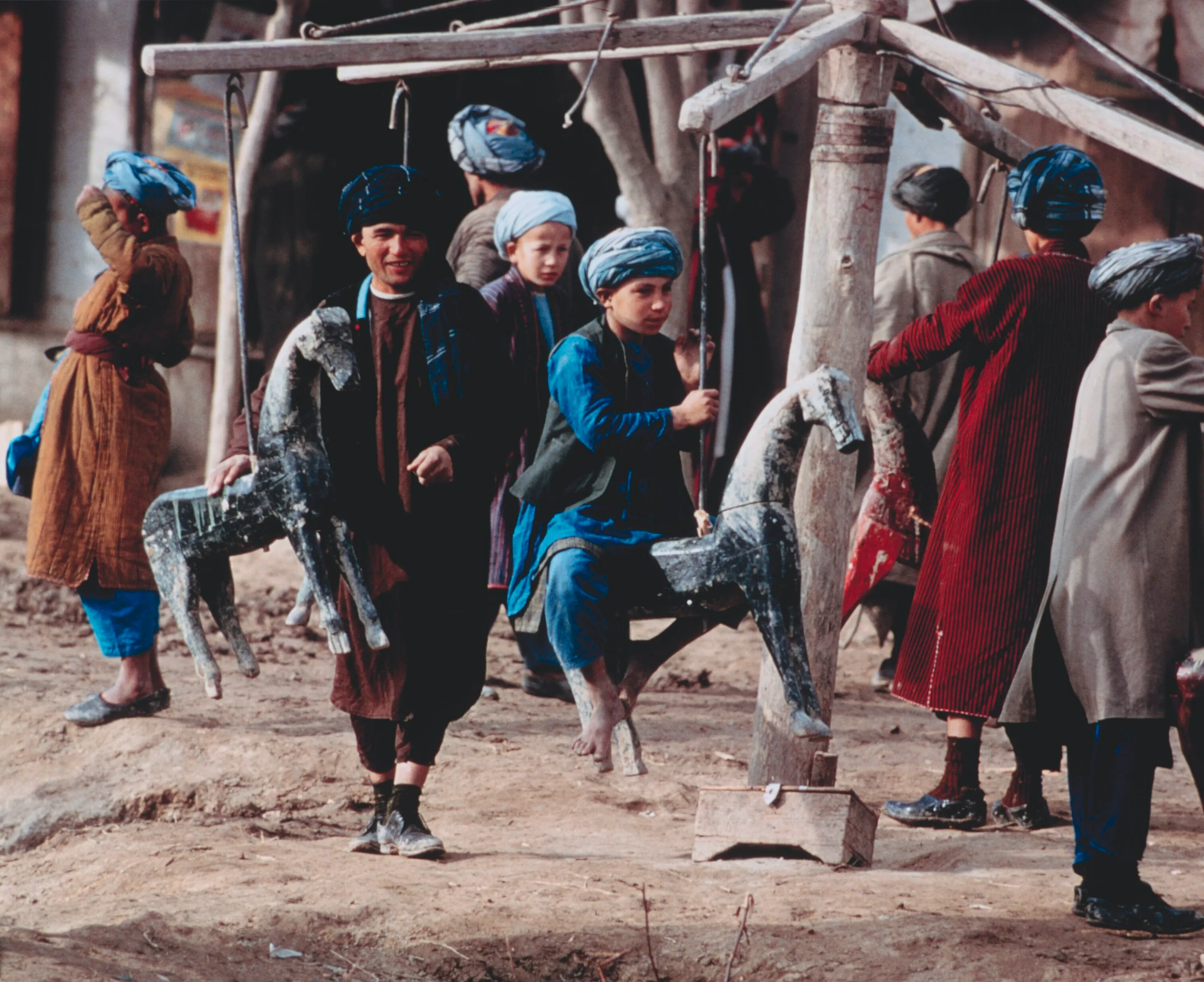
Children in chapan coats riding a carved wooden carousel at the Eid al-Fitr festival in Aqcha, Jowzjan, 1967

who they
are

Uzbek heritage brings together Turkic language, northern histories and diverse local traditions.
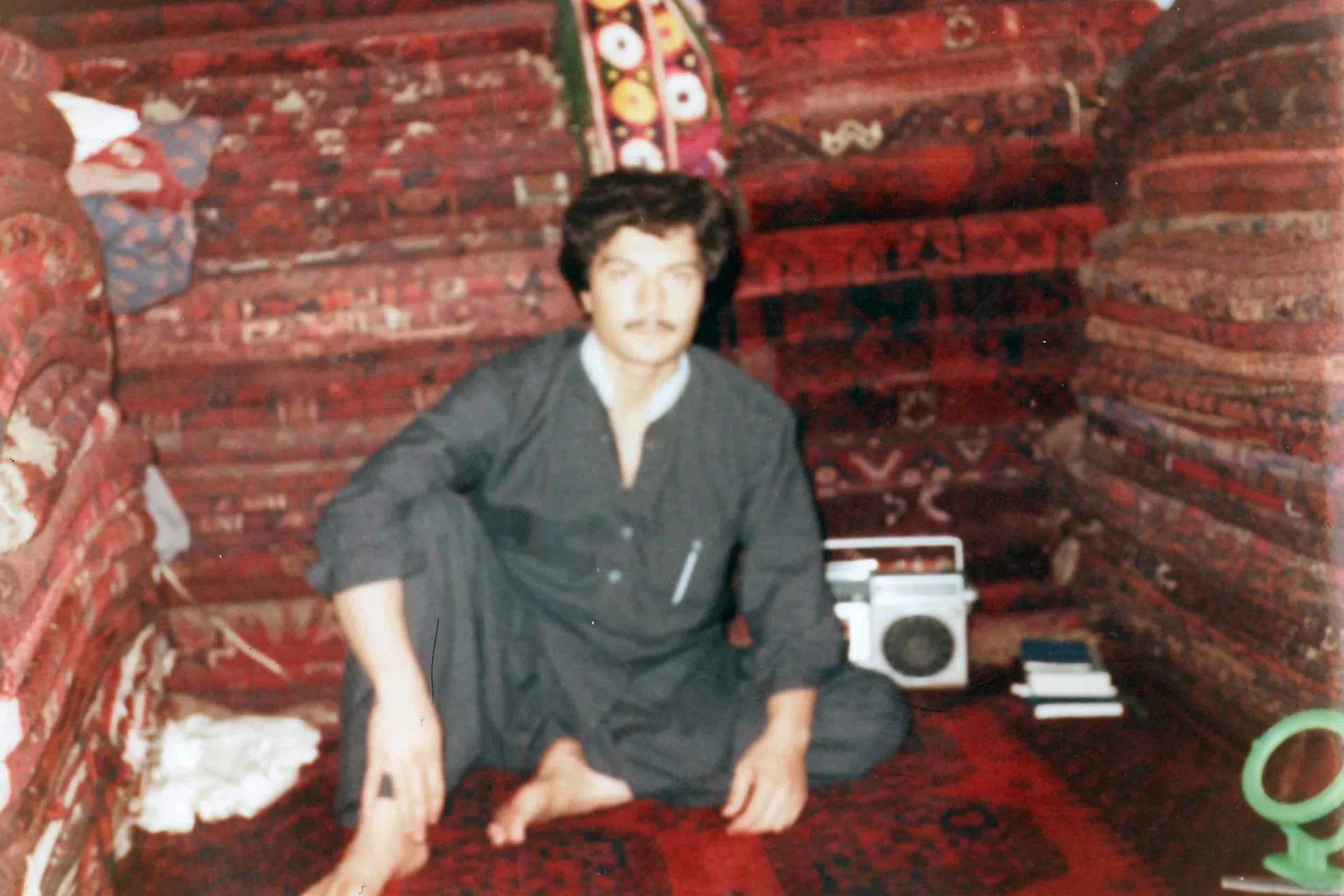
An Uzbek carpet seller sitting in his shop among stacked rugs

uzbek heritage

A longstanding community with deep ties to northern Afghanistan and a cultural presence in towns and villages across the region.Where They Live
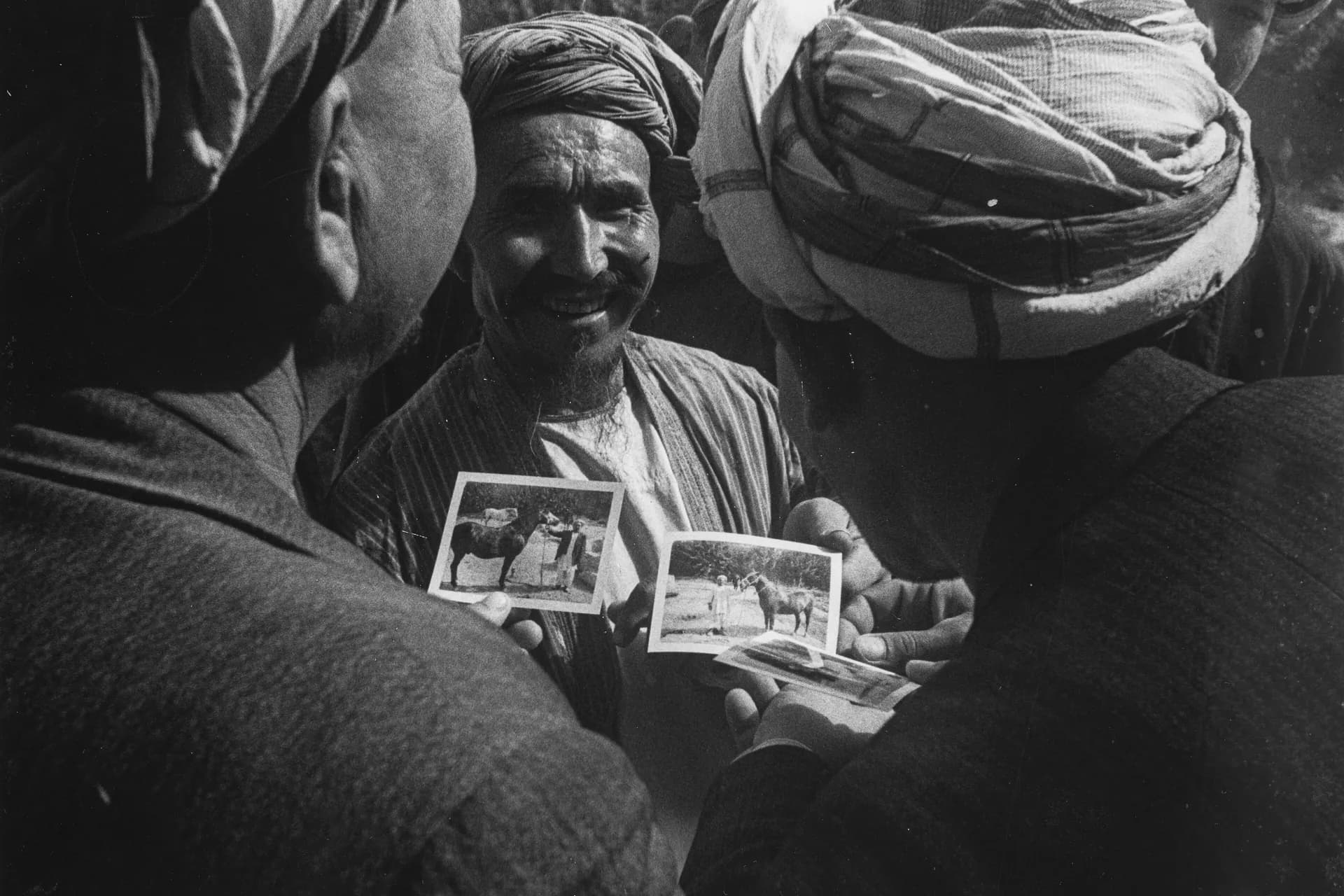
Men sharing photographs in Aqcha, Jowzjan, 1968

language
uzbek

Uzbek, a Turkic language, is the primary language associated with Uzbek communities. Many Afghan Uzbeks also speak Dari or other local languages, depending on where they live.Community Life
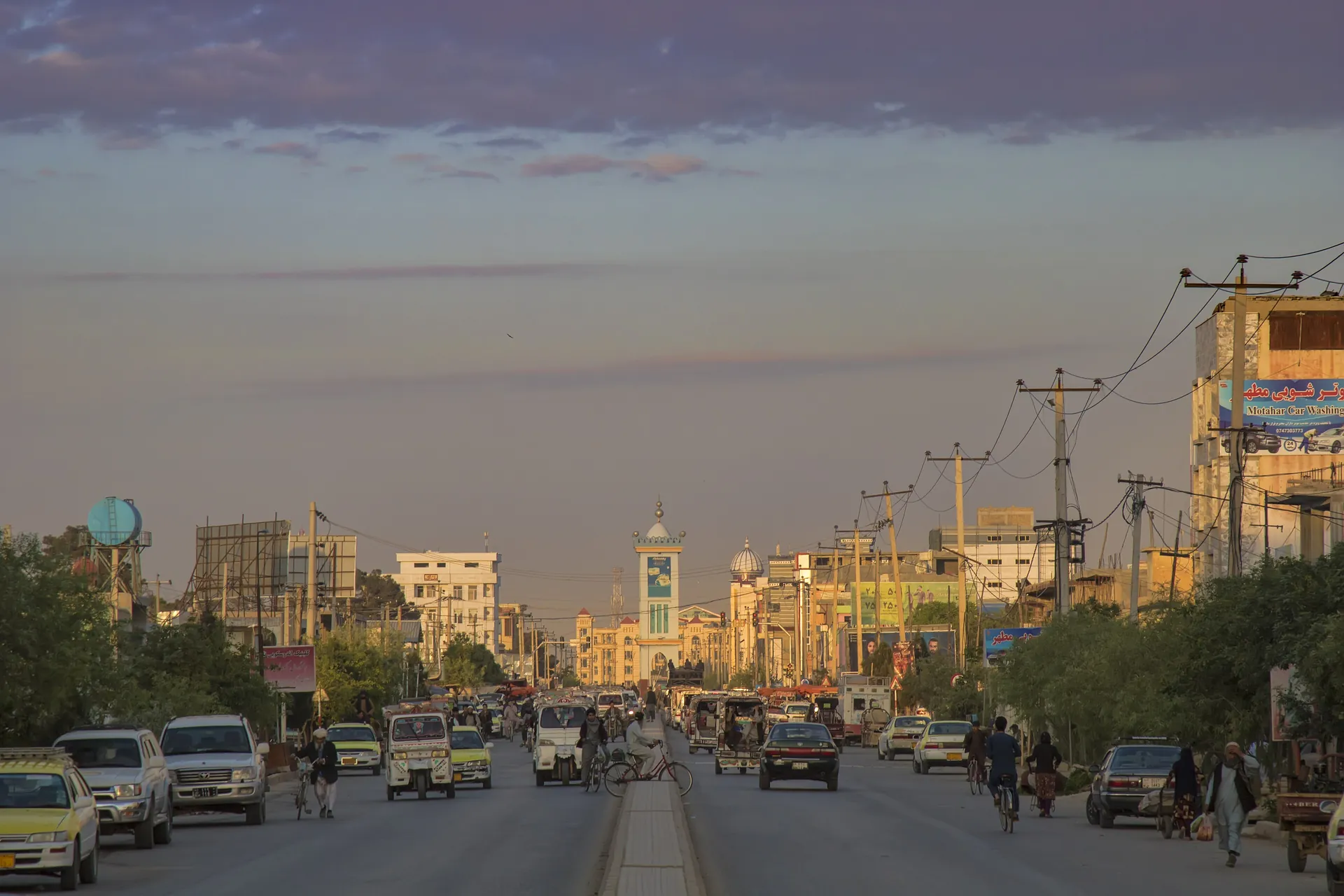
A busy street in central Mazar-i-Sharif

regional diversity

Communities vary by location, with local customs shaped by life in northern cities, farming villages and market towns.Traditional Clothing
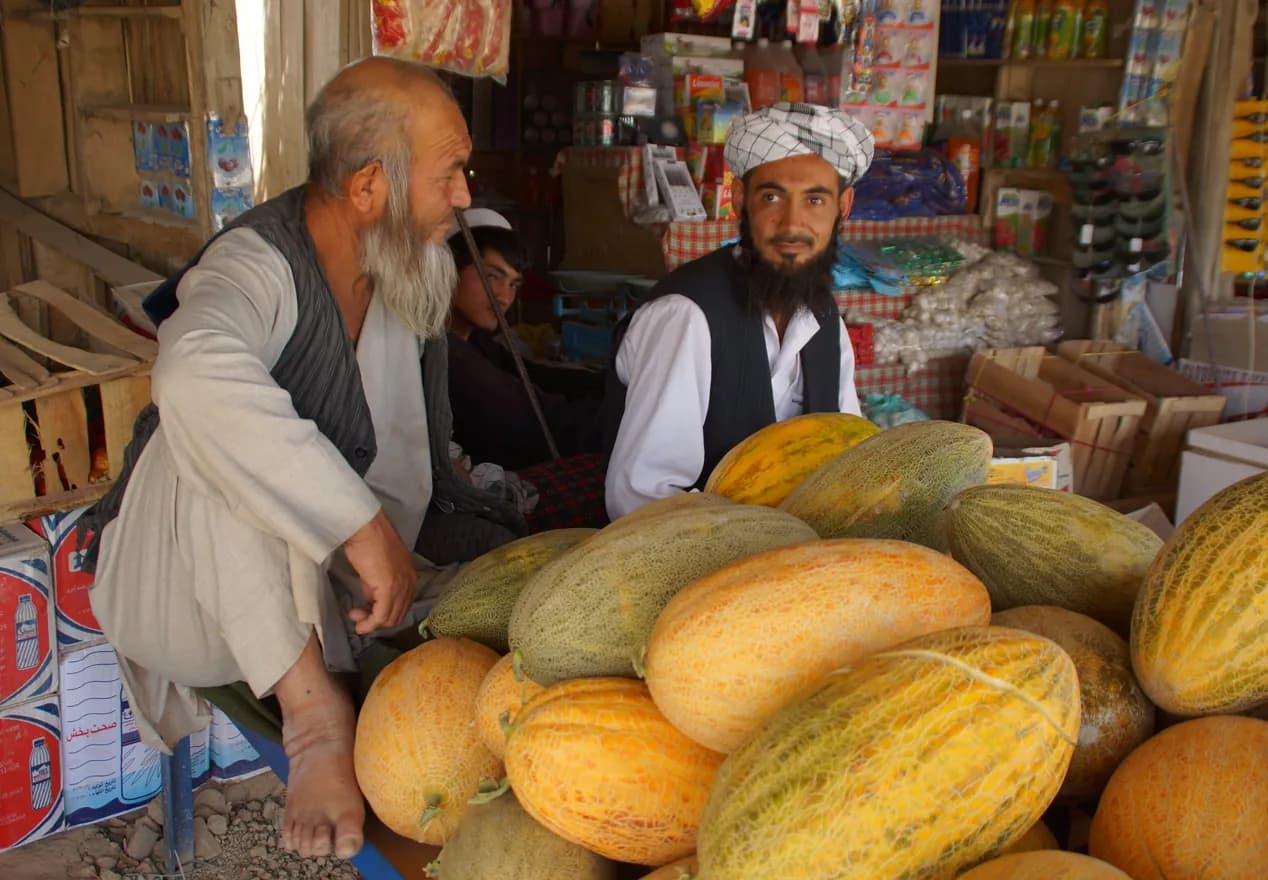
Fruit sellers with honeydew melons in Aqcha, Jowzjan
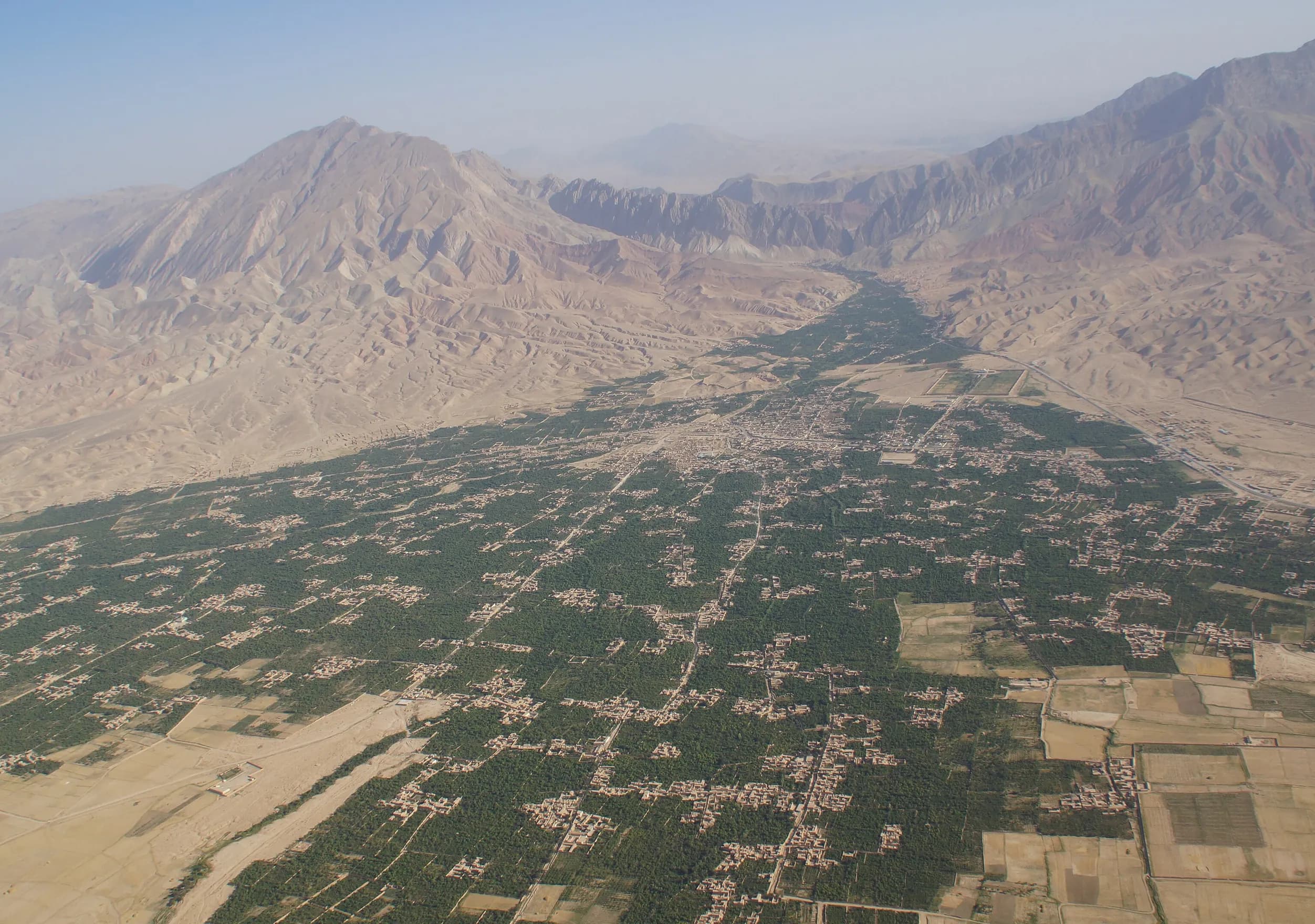
The green orchards of Khulm seen from the air, Balkh
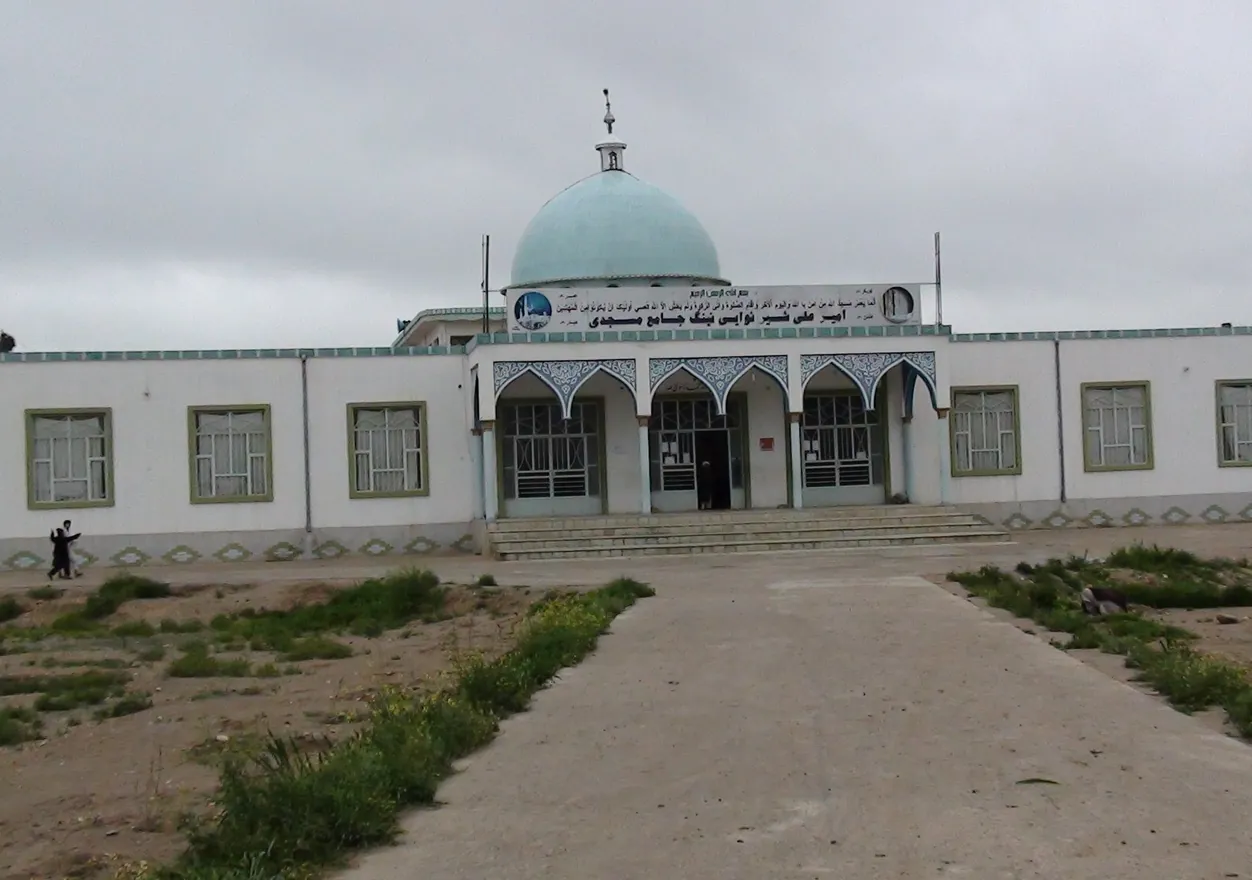
The mosque in Andkhoy, Faryab
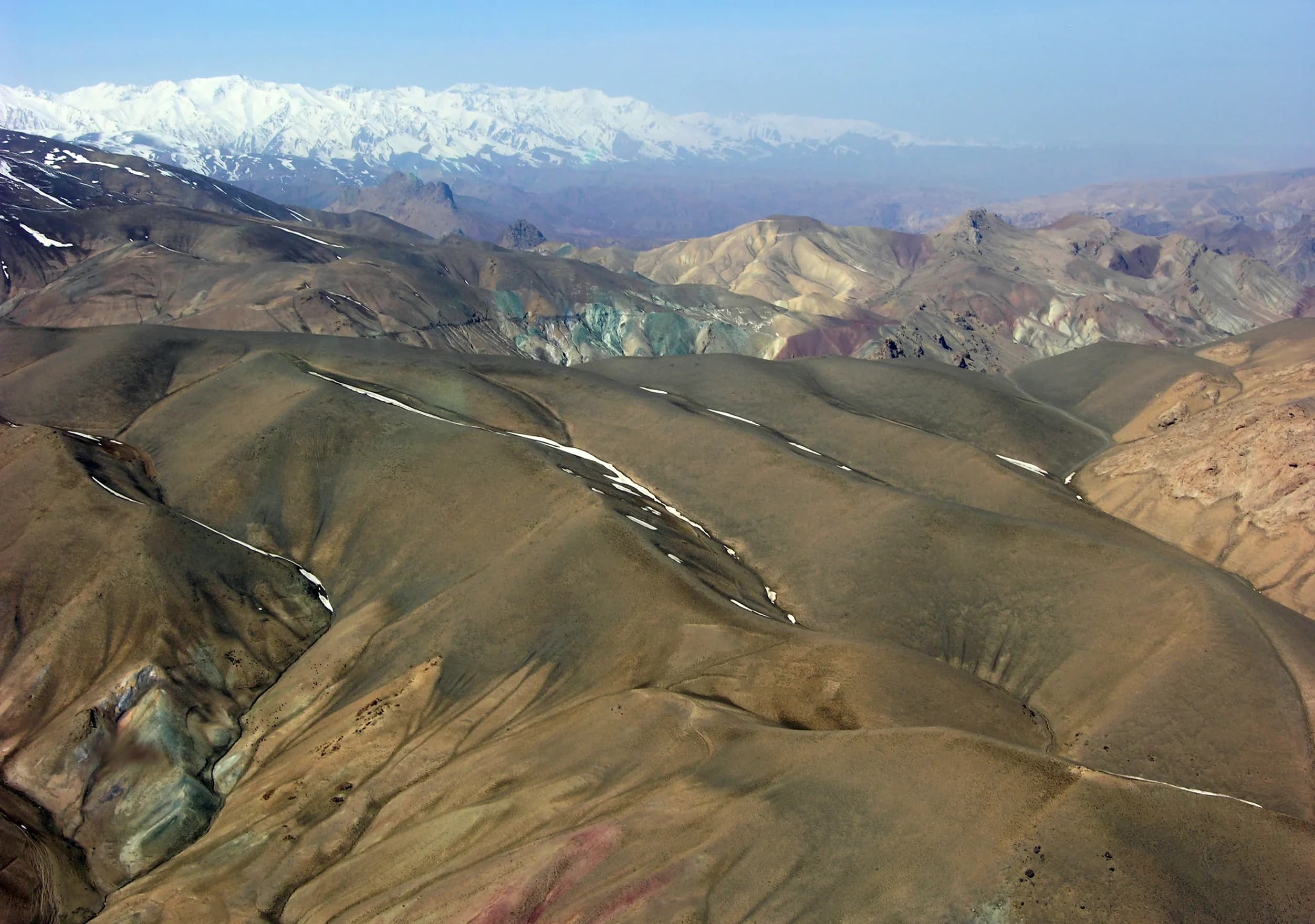
Colorful mineral-streaked mountains in Sar-e Pol, seen from the air
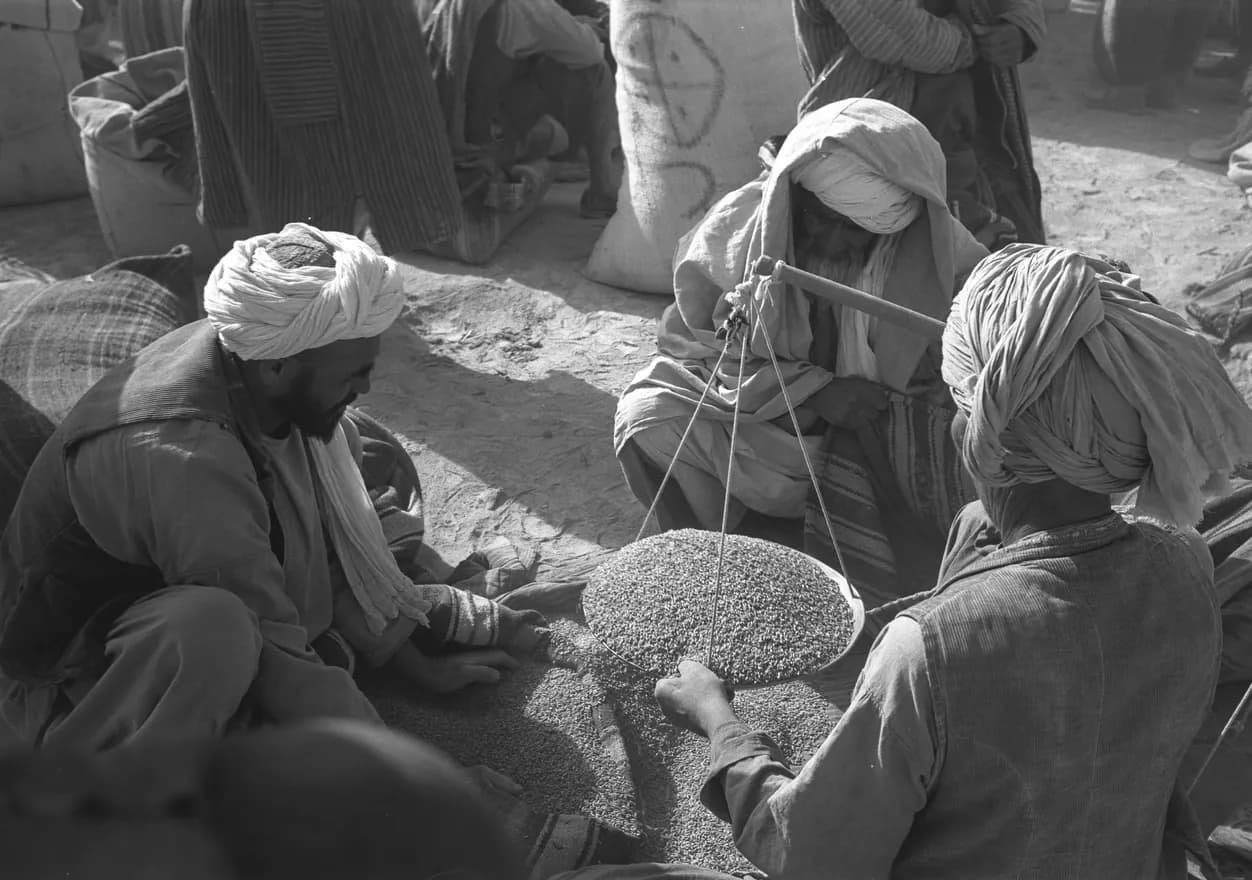
Traders seated around a scale at the grain market in Maimana, Faryab, 1969

WHERE THEY LIVE. Uzbek communities have a strong presence in northern Afghanistan, including Jowzjan, Faryab, Balkh, Sar-e Pol and surrounding northern provinces. Communities also live in Kabul and other parts of the country.

N

NORTHERN AFGHANISTAN
Strong historic presence

UZ

UZBEK
Primary language

AF

ACROSS AFGHANISTAN
Communities throughout the country

KBL

KABUL
Communities in the capital

tra­di­tion­al cloth­ing

clothing & regional styles

Traditional outfits may include long striped chapan coats,
worn over tunics and trousers with caps or turbans.

Long dresses with trousers and scarves are common traditional forms,
often with colorful fabrics, embroidery and jewelry.

Fabrics, colors and stitchwork vary by location;
bright silks and striped patterns are traditional in some northern communities.

Weddings and family celebrations may feature festive clothing,
including embroidered garments, chapans and jewelry in some regions.

community
and values

An Uzbek elder wearing a turban in northern Afghanistan
Ties

Practices vary by region and family.

Hospitality

Welcoming guests

Tea

In many Uzbek communities, welcoming guests with tea, bread and a shared meal is a valued tradition. Customs vary by location and household.

Family Ties

Across generations

Kin

Many families maintain close ties across generations, offering support and sharing celebrations. Relationships and responsibilities vary by household.

Respect for Elders

Experience & guidance

Care

Traditionally, elders are often valued for their experience and guidance. Families express this respect in different ways.

Local Customs

Everyday community life

Life

Greetings, bazaars, gatherings and everyday customs reflect local histories across the north. Practices differ between communities and families.

Community Traditions

Shared cultural heritage

Ties

In many communities, music, storytelling and family gatherings help pass cultural knowledge between generations.

traditions
& cultural identity

Uzbek cultural heritage includes Turkic language and poetry, music, crafts and community traditions, many shared with other Afghan communities. Their expression varies by region and family.

UZBEK LANGUAGE HERITAGE

Uzbek language, poetry and song help carry cultural knowledge between generations.

HOSPITALITY

Welcoming guests is a valued tradition in many Uzbek communities.

CARPETS & CRAFTS

Carpet weaving, embroidery and other handcrafts are part of cultural heritage in many northern communities.

MUSIC & ORAL TRADITION

Folk music, the dutar and oral storytelling connect generations through shared stories.

NOWRUZ

Traditionally, many families mark the arrival of spring with visits and festive meals.

REGIONAL CUSTOMS

Local traditions reflect the diversity of Uzbek communities across Afghanistan.